

Tesla’s flying car did more than create headlines. It created something every marketer secretly hopes for: a moment people actually wanted to share, remix and joke about. That is what makes the story interesting from a marketing perspective. The reveal was simple, visual, slightly ridiculous in the best possible way, and very easy to understand. You did not need to know much about electric vehicles, engineering or the flying car itself. You just had to see one thing: The car flies.
The Product Became the Content
Most product launches still follow a familiar formula: features, specifications, polished videos, carefully written announcements and a lot of people nodding next to a screen. Tesla had a much easier job. A car takes off – that is already a Reel. It works with the sound off, it works in five seconds, it works as a headline and it works as a meme. The product demonstration did not need to be turned into content. It already was content. And that is a very useful marketing lesson on its own. The less explanation an idea needs, the easier it is to spread.
Then the Internet Did What the Internet Does
Once the footage started circulating, Tesla was no longer the only one producing content around the Roadster. The reveal generated reaction videos, memes, AI recreations, technical debates, media coverage and plenty of brand responses. The original stunt quickly became raw material for everyone else. That is the dream version of earned media: Tesla created the event. The internet created the campaign. And every new joke, reaction or argument gave the original story a little more life.
Brands Joined the Fun
Some of the best reactions came from brands that had absolutely nothing to do with cars.
IKEA Taiwan recreated the flying car moment using toy cars. The post reportedly generated more than 87,000 likes and more than 1000 comments.
HKTVmall made its delivery truck “fly”, connecting the trend directly to fast delivery. That is a good example of reactive content doing more than just chasing attention: the joke still leads back to the actual service.
Volvo went in the opposite direction with the wonderfully dry:
“Down to Earth. Since 1927.”
Hot Wheels reminded everyone that it had been sending cars into the air since 1968.
Razer recreated the stunt with a gaming mouse.
Toblerone found a way into the conversation with a duty-free joke.
None of these brands needed a flying car. They just needed a good reason to join the joke. And that is the difference between good reactive marketing and awkwardly squeezing a trending topic into a post because “everyone is talking about it”.
Why Was it So Easy to Market the Flying Car?
The flying car had three things social media loves.
1. The idea was incredibly simple
No explanation was needed, no long caption, no technical presentation. No “swipe to understand what is happening”. It was a flying car and people got it.
2. The visual was made for short-form content
A car enters the frame, takes off and lands. That is basically a ready-made social video. It can be cropped, reposted, reacted to, parodied and turned into a meme without losing the original idea.
3. The joke practically writes itself
A flying car immediately creates opportunities for jokes about traffic, parking, insurance, speed limits, road signs and, naturally, potholes. Especially potholes. The easier it is for people to connect an idea to everyday life, the more likely they are to do something with it themselves.
AI Gave the Flying Car Trend Another Boost
The timing also helped. Generative AI has made it much easier for creators and brands to build their own versions of viral moments. Soon, social media was full of increasingly ambitious interpretations: cars flying over traffic, hovering above cities and doing things the original Roadster definitely did not do. For marketers, that changes the speed of reactive content dramatically. A few years ago, responding to a visual trend like this could require a designer, an editor, a 3D artist and at least one person saying, “Can we have it by Friday?” Now, a decent concept can sometimes be turned around in hours. That means a strong cultural moment can spread faster and live longer than before.
Even the Argument Helped
Then came the inevitable question:
“But is it really a flying car?”
Some people called it exactly that. Others rushed in to explain that a short airborne manoeuvre is not the same thing as sustained flight. And from a marketing point of view, that was excellent news. People shared the clip because they loved it. Others shared it because they thought it was ridiculous. Others shared it because they urgently needed everyone to understand the engineering. All three groups were still talking about Tesla. That is one of the funnier truths about viral marketing: people do not have to agree with the story for the story to spread.
How Bulgaria and the Balkans Joined the Flying Car Conversation
Bulgaria Insurance took the ride with a brilliantly executed AI concept created by SALUT that sent a car flying past Sofia’s most famous landmarks, landing gracefully in a rare open parking space – right before another driver opened their door into it. By using AI to bring an impossible visual to life while delivering a humorously practical message, we turned a trending moment into a direct pitch for car insurance.
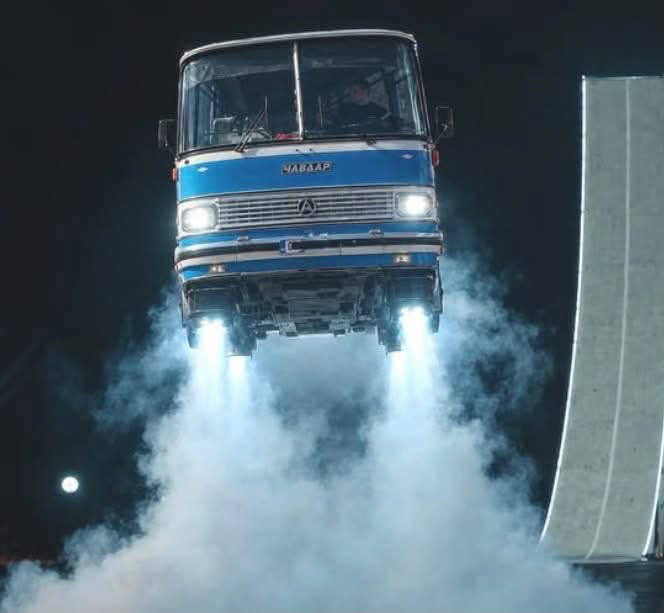
The flying car idea travelled quickly across the region too, mostly through humour, parody and local references. In Bulgaria, the trend received a particularly familiar interpretation: the Chavdar, the famous retro Bulgarian bus, suddenly airborne, original creator unknown. The joke works because it takes a futuristic global story and replaces the shiny prototype with something generations of Bulgarians instantly recognise.
Bulgarian example:
The trend also made its way into branded content. Happy joined the conversation with its own take on the flying car moment, showing how quickly a global tech story can be adapted into light, entertaining content for a local audience.
Across the Balkans, other creators and brands followed with their own versions:
The interesting part is not simply that the original footage was reposted. The idea was localised. Familiar vehicles, brands and regional humour turned the same global trend into content that felt native to completely different audiences.
That is usually a very good sign that a marketing moment has travelled: people stop repeating it and start making it their own.
The Marketing Lesson
The most interesting thing about the Roadster reveal is not really the car. It is how easily the moment travelled. A strong marketing moment gives people something they want to repeat: a visual, a joke, a debate, a simple idea or a format that can be adapted. Tesla did not just announce a product. It created something that media, creators, brands and audiences could all play with. And that is often where the best marketing happens.
Create something people want to repeat, not just something you want to announce.
And if your brand needs help turning a trend, product launch or cultural moment into content that feels timely without trying too hard, just say…